






How to Protect Garden Dining Furniture from Rain
-
 How Much Space Do I Need Around a Garden Dining Table? March 7, 2026
How to Protect Garden Dining Furniture from Rain August 28, 2026
How Much Space Do I Need Around a Garden Dining Table? March 7, 2026
How to Protect Garden Dining Furniture from Rain August 28, 2026 -
How to Protect Garden Dining Furniture from Rain August 28, 2026
How Much Space Do I Need Around a Garden Dining Table? March 7, 2026

Monthly Archive
Categories
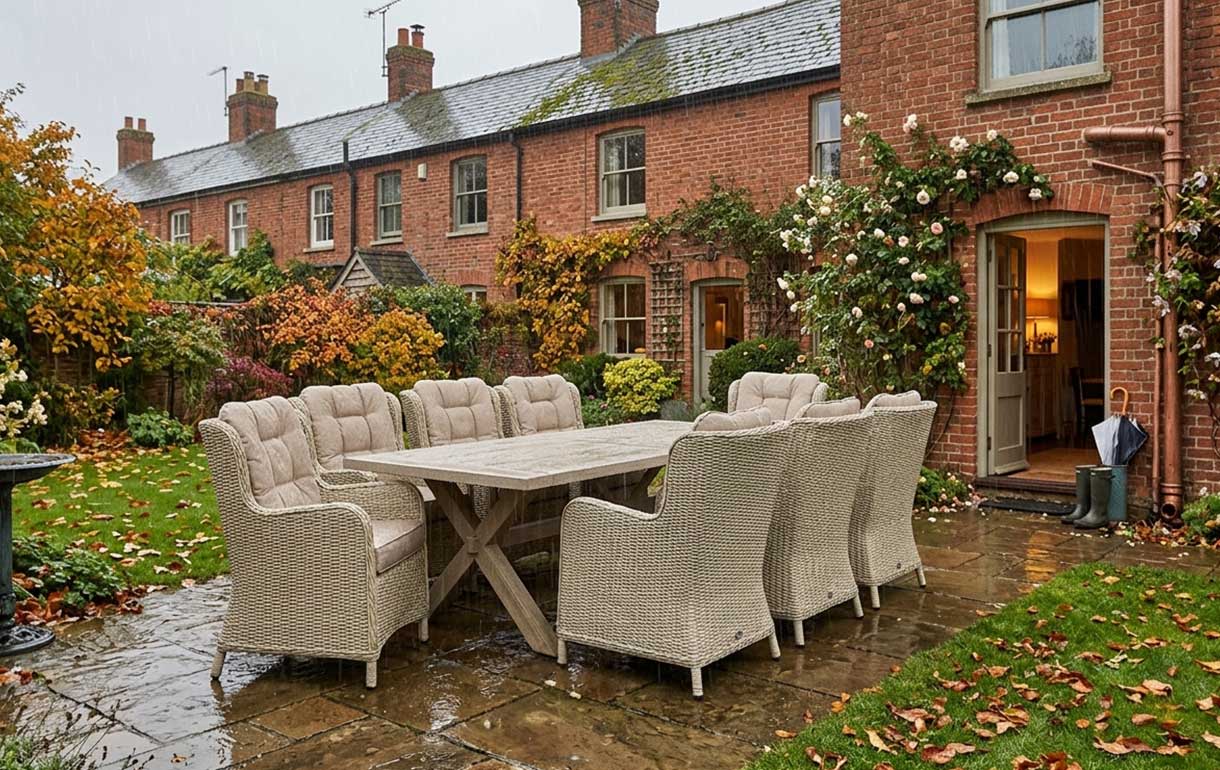
We all know that rain is unavoidable, and it is a part of owning garden dining furniture in the UK. Even during the summer months, a warm afternoon can quickly turn wet. That’s why it’s important to be prepared and know how to protect your garden dining furniture from rain.
Most good-quality garden furniture sets are designed with the outdoors in mind. What this means is that a rain shower isn’t cause for panic and will not destroy your furniture. That said, it is important to know what your furniture is made of and how rain affects it. Also, we think it’s always good to know what NOT to do! Owner of Just Garden Dining, Dave Sadler says, “One of the things we often notice is that people worry about rain more than they need to. Outdoor furniture is designed to be outside. The bigger issue is leaving everything permanently wet, particularly cushions.”
Does rain damage garden furniture?
No, rain will not damage your garden furniture frames. Most garden dining sets can stay outside all year round. There’s no need to worry about bringing furniture sets indoors or into storage every time it rains.
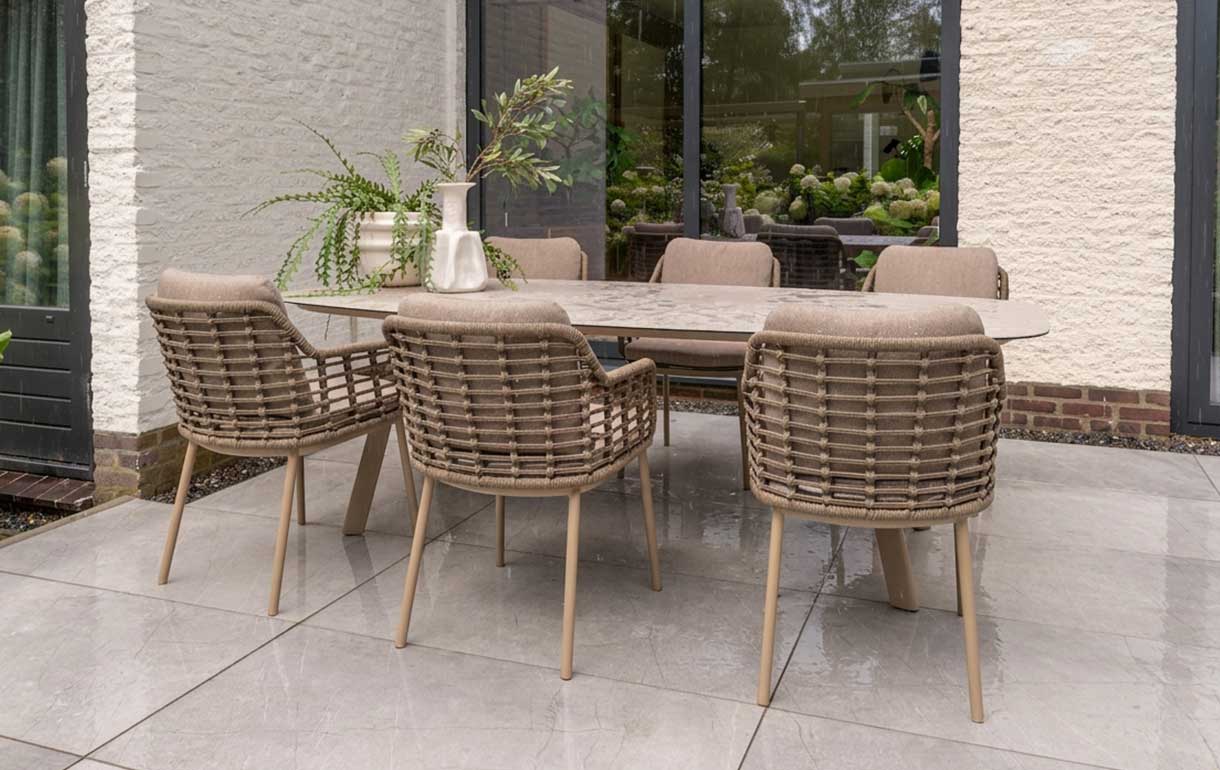
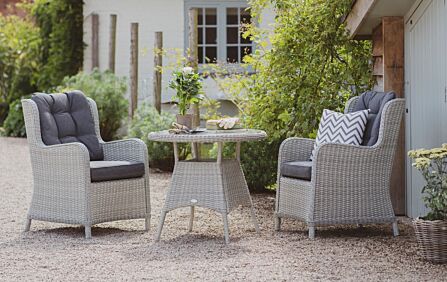
The most common materials used in garden furniture are man-made products: synthetic rattan and aluminium. Both of these materials are well suited for life outdoors. They can be left outside year-round, even in rain. This is because they are highly durable materials designed with every weather condition in mind. Further into this blog, we will take a closer look at these two materials to help you understand why they can stay outdoors.
Natural materials, such as wood, will react differently to rain than their manmade counterparts. This does not mean that they are a bad choice for garden furniture. Materials like teak or acacia respond to changes in temperature and moisture levels. Typically, they will change colour or texture. This is a normal part of the ageing process and has no impact on the strength of the product.
Cushions should be treated as a separate product; they are not the same as your garden dining set frame. Cushions usually need the most attention, especially if you want to keep them looking like new. Good-quality cushions will be able to withstand a light shower; this does not mean that they should be left outside in the rain. After all, they are water-resistant, not waterproof.
Should you cover garden furniture when it rains?
High-quality covers are a great investment, especially when you know you won’t be using your furniture all the time. Whenever you are not using your furniture, we would always recommend that you cover it with a breathable furniture cover.
However, we know that sometimes you can forget to put that cover on, especially when a downpour comes out of nowhere! If this happens, don’t rush out to cover your furniture. If you do, all of that moisture will be trapped underneath the cover, and your furniture won’t be able to dry properly. Over time, a buildup of moisture will lead to mould and mildew forming on your furniture. If your furniture is caught in a downpour, always let it air-dry fully before covering it.
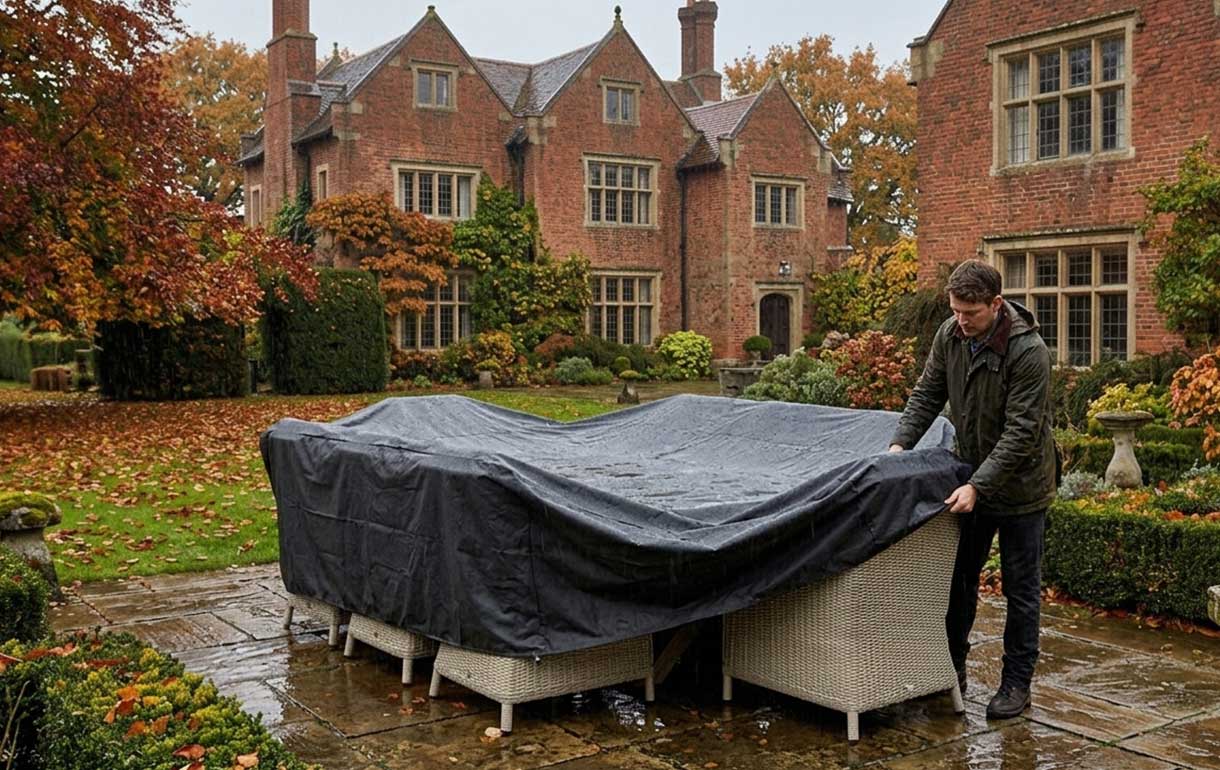
Only use a breathable cover; otherwise, it is completely pointless. Owner, Dave Sadler, says, “A cover shouldn't be thought of as a sealed bag for your furniture. Airflow is important. You want air to circulate underneath the cover, rather than trapping moisture against the furniture. Good airflow helps everything dry naturally and reduces the chance of condensation and damp being held underneath the cover.”
How to protect garden cushions when it rains
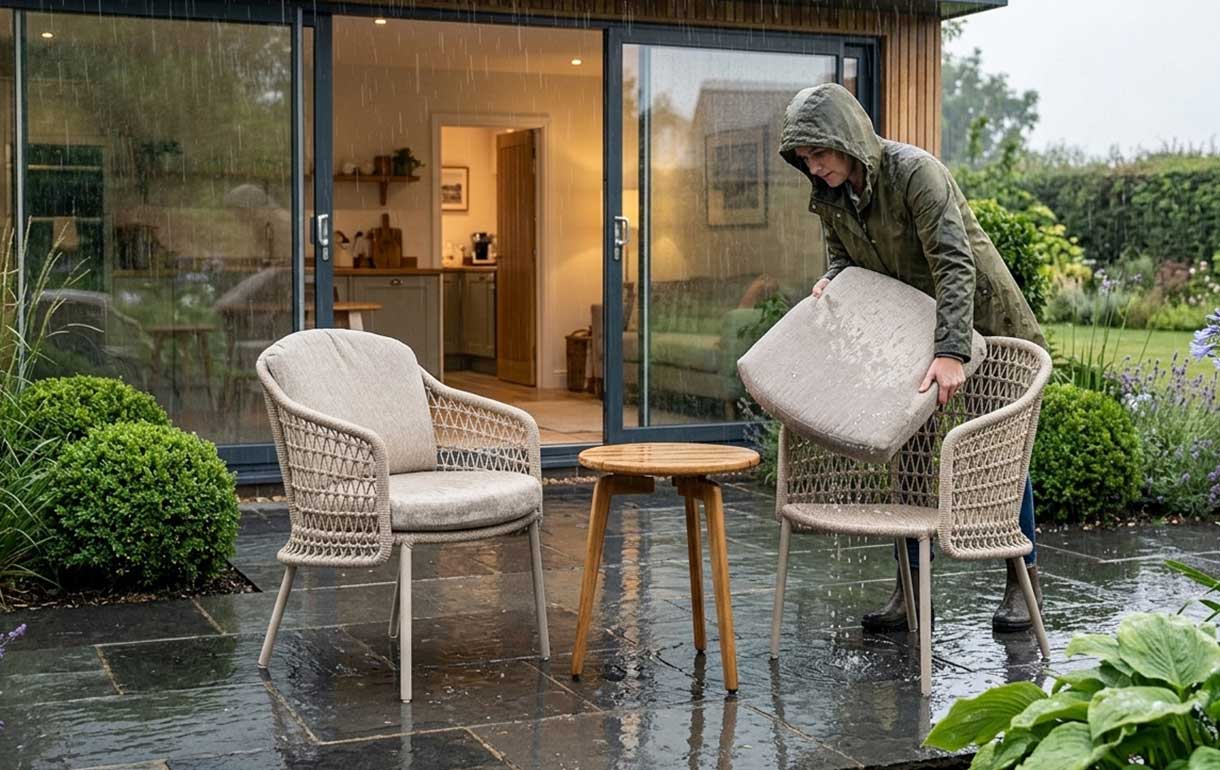
As we’ve said before, cushions demand the most attention when it comes to garden furniture. If heavy rain is due, the best thing to do is bring the cushions indoors. This helps prolong the life of your cushions. Always bring your cushions indoors if you won’t be using your furniture for several days.
Now, we know how easy it is to forget about your cushions, and sometimes they do get wet. It’s important to let them fully air dry before storing them. Ideally, stand them somewhere with good airflow so they can dry quicker. If you store the cushions while they are still damp, mould and mildew are more likely to grow.
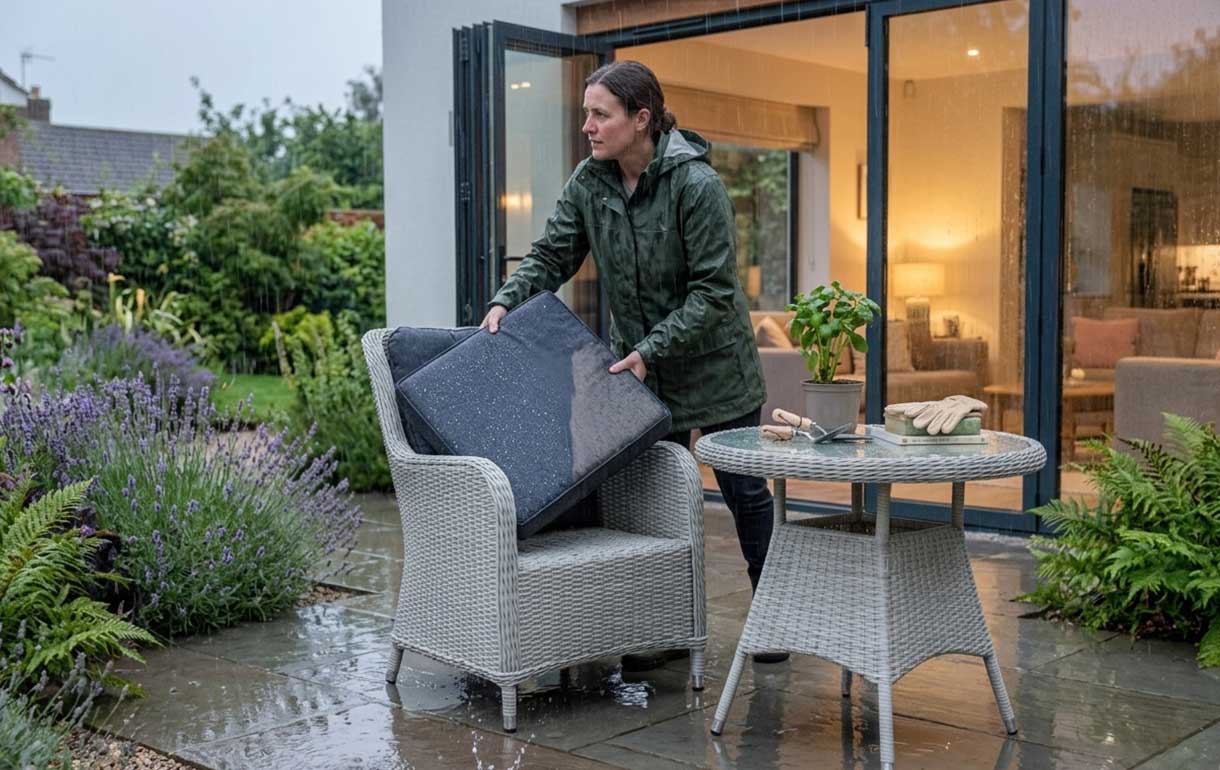
When speaking to customers, we always tell them to adopt this very simple habit: bring your cushions indoors when you are finished using your garden dining furniture. It only takes a few extra minutes, but it can save you the headache of dealing with damp cushions later. Small, consistent habits are more effective than an occasional intensive clean.
Another thing to consider is a protective cover. If you use a cover, you can leave the cushions outside underneath the cover during the warmer months. With that being said, if heavy rain is forecast for several hours, then we would recommend you check your cushions afterwards. After heavy rain, lift the cover to air the furniture. Then, as the weather begins to get colder, we advise you to take your cushions indoors.
Can you leave aluminium garden furniture outside in the rain?
Yes, powder-coated aluminium furniture is absolutely fine left outside in the rain. Aluminium is suited to life outdoors because it doesn’t rust as steel does. Aluminium used in garden furniture is typically powder-coated. This means that the aluminium has a protective finish that helps it withstand the elements.
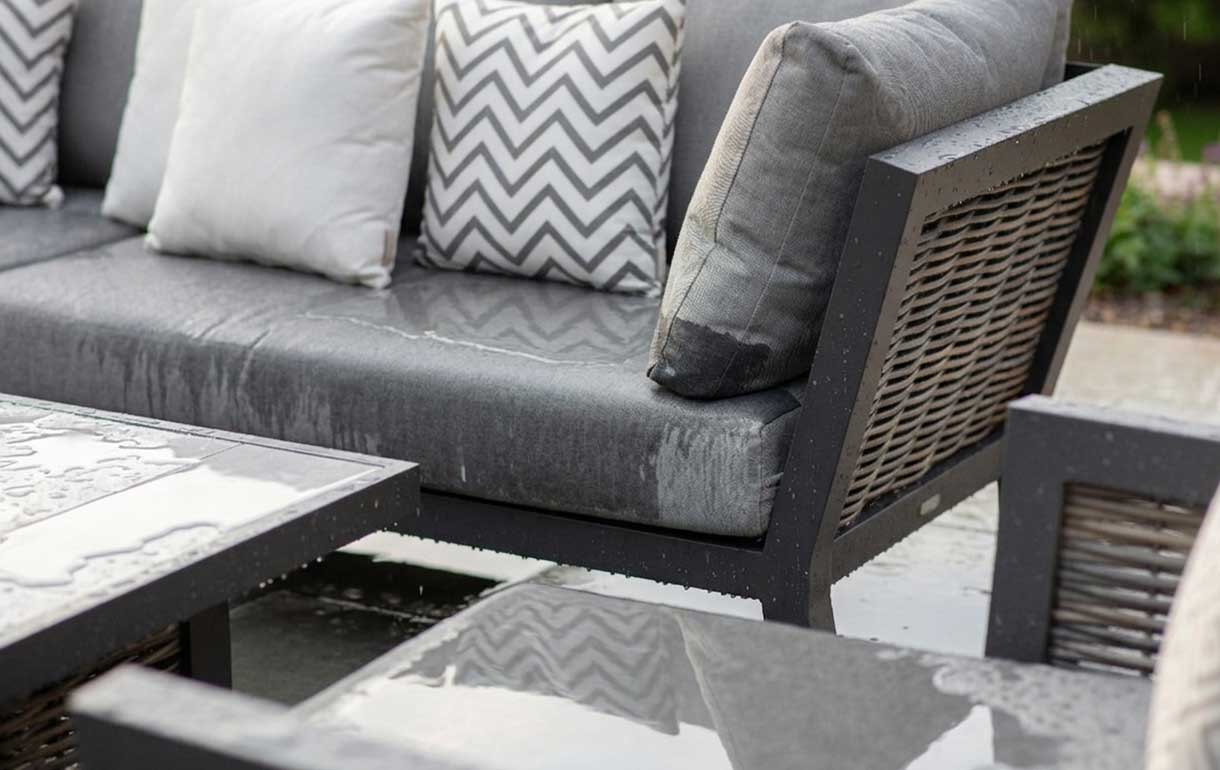
After particularly wet weather, check the frames for any debris or standing water. It is always advisable to periodically clean aluminium garden furniture to remove any dirt, bird droppings or other garden debris that can build up over time.
What happens to wooden dining furniture in the rain?
Wood is different because it is a natural product. Wood absorbs and releases moisture as the weather changes. This can lead to a change in colour, fine cracks or surface changes. All of these are a natural part of the ageing and weathering process; they do not affect the strength of the product.
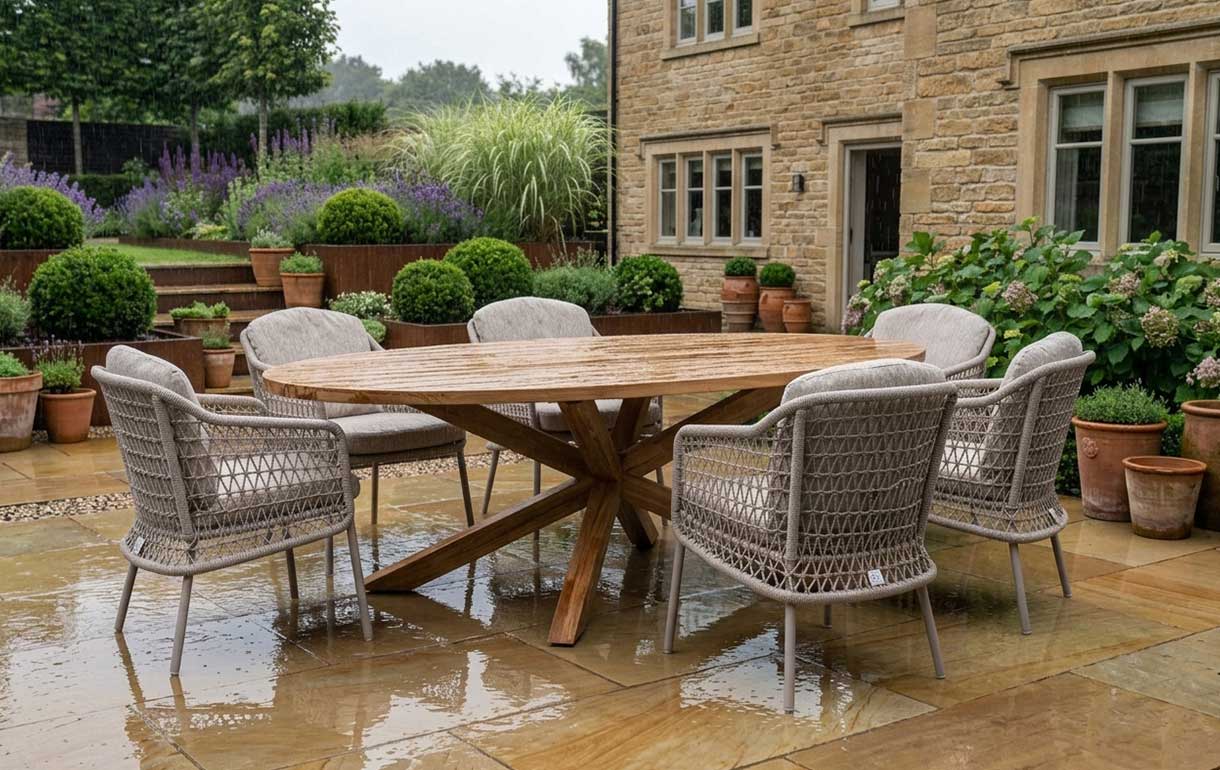
Avoid the assumption that all wooden garden furniture needs treating with oil because it is outside. This is not true; it depends on the type of wood and the manufacturer's advice. Some types of wood will not benefit from a treatment; if in doubt, revert to your retailer for advice.
Can rattan dining furniture be left outside in the rain?
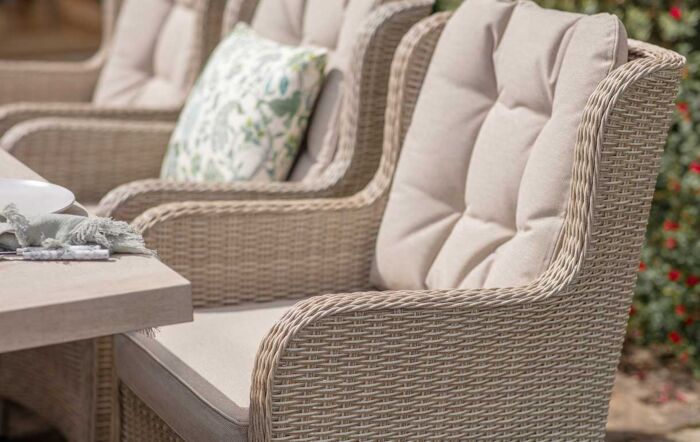
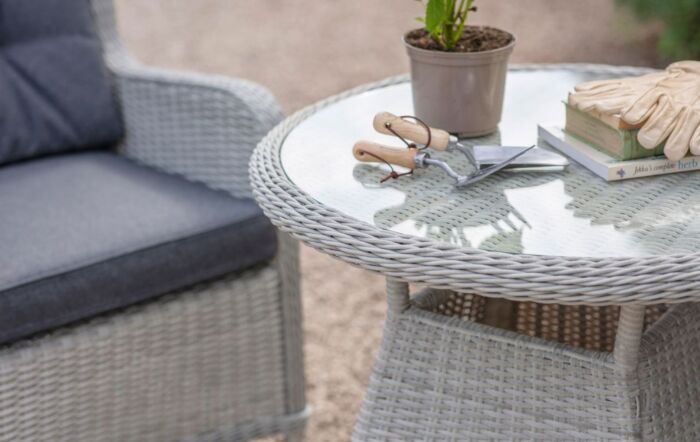
Yes, synthetic rattan can stay outdoors all year round. Rattan garden furniture sets are made from synthetic rattan, not natural cane. PE rattan is made for use outdoors; it doesn’t absorb moisture like its natural counterpart. This means that rain can run over the frames and the weave will not swell or decay.
Use a protective cover to keep the frames clean; heavy rain can cause an increase in dirt or dust on the frames. Not only that, but a cover keeps your furniture dry so you can use it once the rain stops.
After the rain stops
In summer, a heavy downpour can be quickly followed by bright sunshine, so you might want to use your furniture as soon as possible. There are a few easy things you can do.
First, remove any standing water from your outdoor dining table. You could do this by gently raising the table at one side or simply wiping the water off with a brush or cloth.
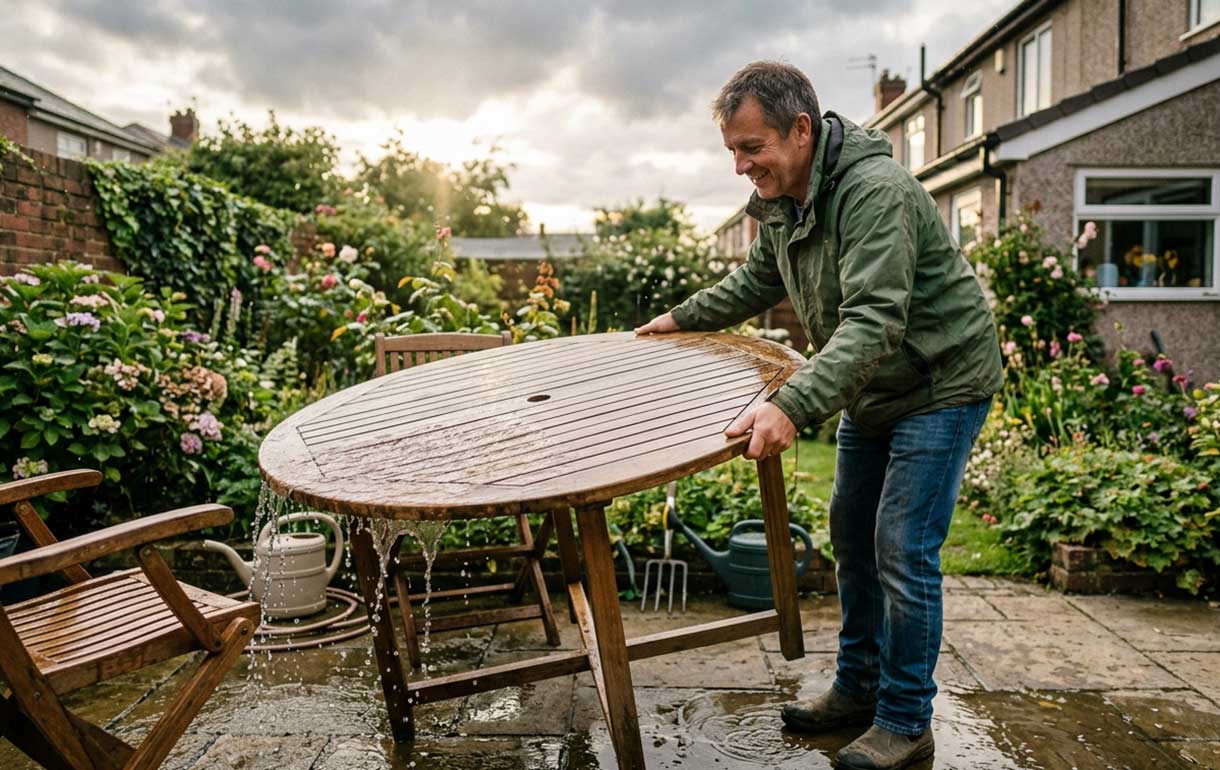
If you have a furniture cover, remove this once the sun begins to shine to allow your furniture to air. This will also allow the water to flow off your protective cover. Remove any debris or dust that you might find. Rain does not mean major maintenance is needed; you just want to avoid letting rain sit on top of furniture and furniture covers.
What to do with your dining furniture in winter
Winter does not mean that you need to store your garden furniture away until spring. Moving outdoor dining furniture is not practical and really not necessary. Good quality garden furniture is designed to live outside, so leave it there.
The only component to think about is the cushions, but this is simple. Store them somewhere that is indoors and dry. Our customers often mention using garages, sheds or lofts to store outdoor cushions over winter. If you opt for a garage or a shed, we would recommend you store the cushions off the ground where possible to avoid damp. You could use a cushion bag or large bin bags to keep your cushions together and clean during the storage period.
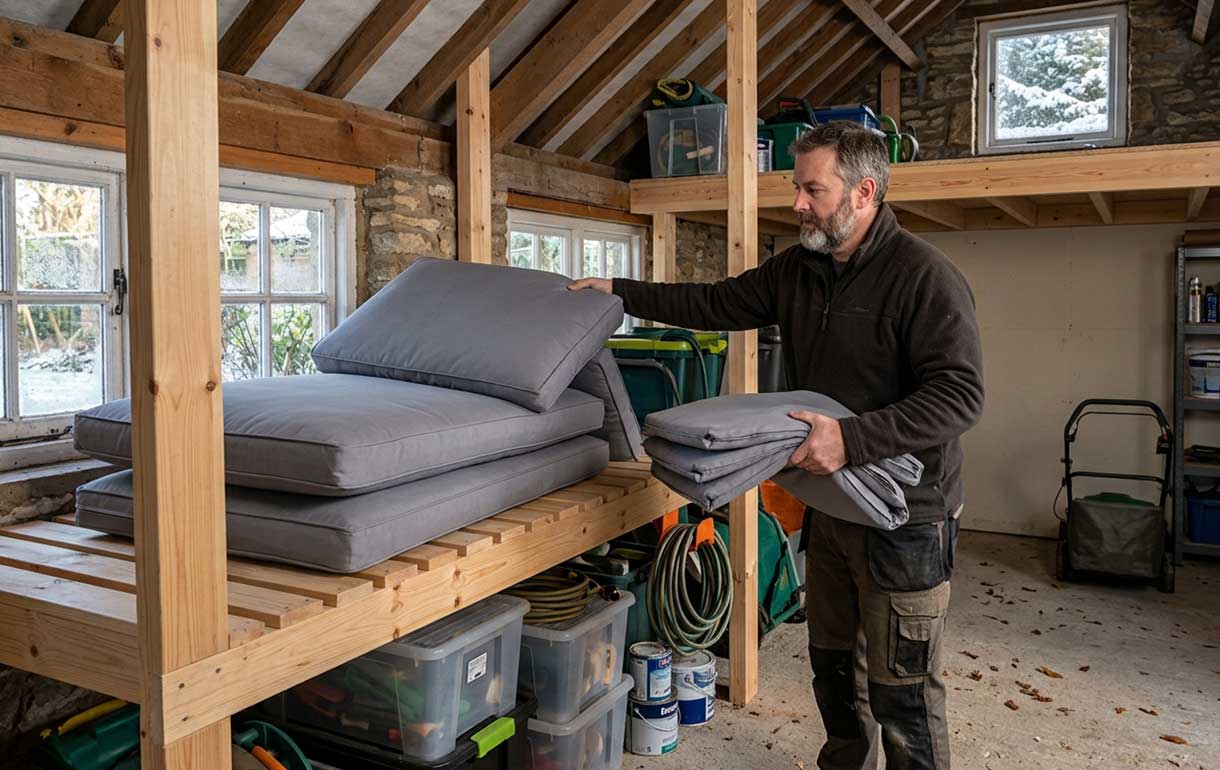
For the furniture frames, you can leave them outside covered or uncovered; the choice ultimately lies with you. However, we always recommend a cover because they protect your frame from the elements as well as garden debris and dirt. We believe that garden furniture should be fuss-free, says manager Dave Sadler: “During the winter months, a good-quality cover becomes particularly important. Garden furniture is built to withstand the weather, but protecting it from constant exposure to rain, frost and dirt helps keep it looking its best and reduces the amount of maintenance needed when spring comes around.”
A simple approach to rainy weather
For most garden dining sets, there are a few things that you can do to make life easier:
-
Bring cushions indoors when heavy rain is forecast
-
Allow wet cushions to completely dry before use or storing away
-
Use a breathable furniture cover when your furniture is not in use
-
Don’t cover wet furniture; let it dry first
These steps are simple and take up very little time. However, they protect your dining furniture and help prevent any lengthy maintenance in the future.
Frequently Asked Questions
Q: Does a furniture cover need to be waterproof?
A: No, your cover must be water-resistant and breathable. These two characteristics will protect your furniture and allow airflow. An impermeable cover will trap moisture underneath and encourage mould growth.
Q: Should I cover wet garden furniture?
A: No, it is best to avoid covering wet garden furniture. Allow the furniture to fully dry before using your breathable cover. Covering wet furniture traps the moisture under the cover; this allows mould and mildew to grow.
Q: Will the rain damage my garden cushions?
A: Light rain will not cause immediate damage to your cushions as they are designed to be showerproof. However, prolonged exposure to rain will saturate the fabric and foam filling. If you regularly leave cushions outside during rainfall, they are more likely to develop mould.
About the Author

Chloe Shaw is a Garden Furniture & Conservatory Furniture Specialist with many years of experience working at JB Furniture. Chloe combines her deep knowledge of garden furniture trends with her talent for creating engaging and informative content. She loves sharing inspiration, design tips, and product insights to help readers transform their gardens and conservatories into beautiful and inviting retreats.
Login and Registration Form